
Robert Wachter has talked many times about the productivity paradox: new technologies that promise to increase efficiency often take years to deliver on their promise.
Why the delay?
Because our first instinct with any powerful new technology is to graft it onto the existing way of doing things. In the short term, this feels like the path of least resistance. We ask how the new tool can make the old workflow faster, cheaper, or slightly less painful. And sometimes it does. But the real gains usually come later, when we stop asking how to attach the technology to the old work and start asking how the work itself should be reimagined.
Healthcare has learned this lesson painfully.
Take the electronic health record (EHR). Computerizing medical care seemed like the obvious thing to do. But we didn’t really reinvent the medical record. In many ways, we digitized the old paper chart: the same notes, the same institutional memory, the same professional habits, now trapped behind a screen. To that we added new chaos: billing artifacts, compliance language, inboxes, alerts, copy-forward documentation, and a record that often serves the institution more faithfully than the patient or the clinician.
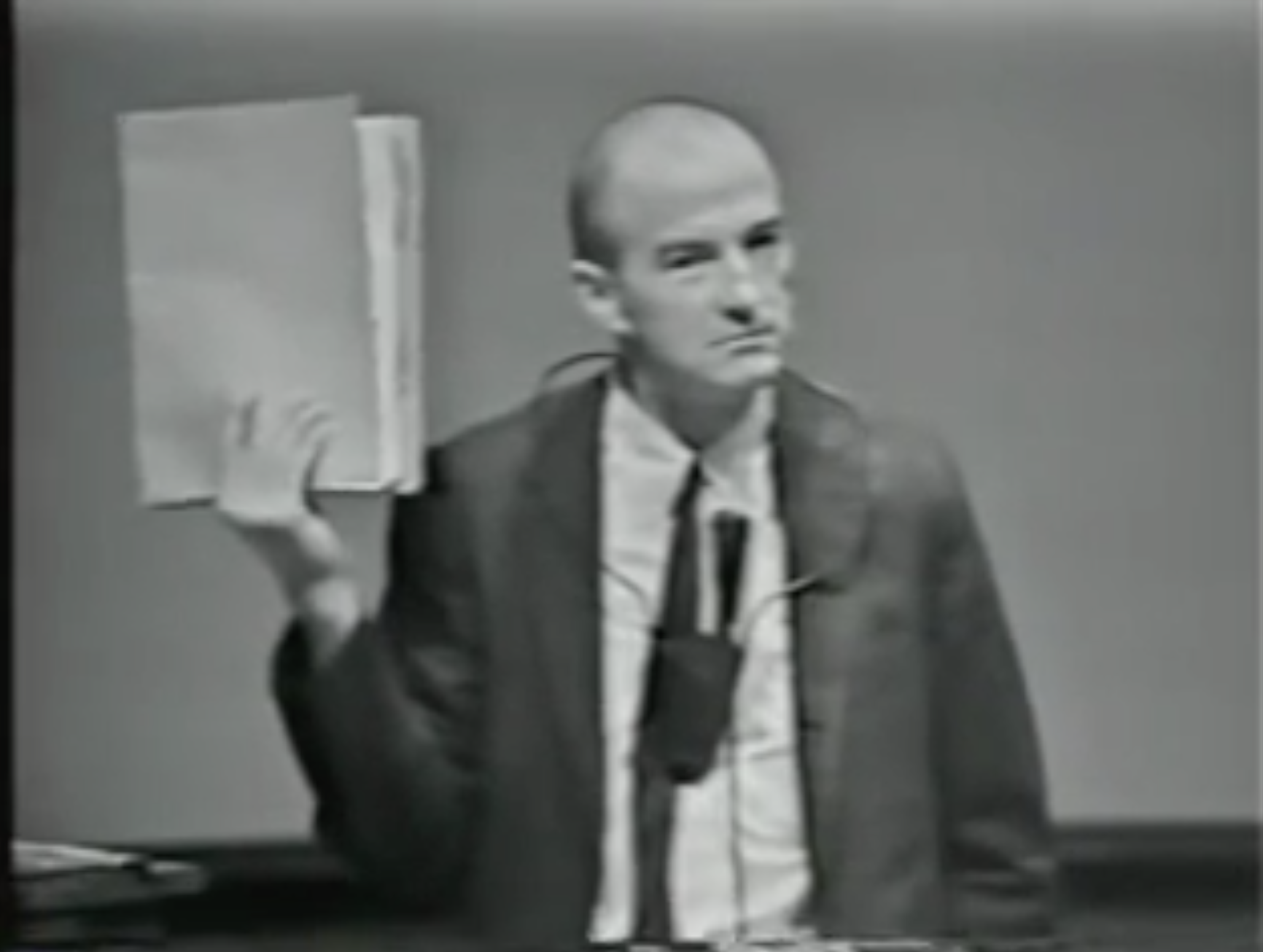
Larry Weed, who invented the problem-oriented medical record and the SOAP note, had a much more ambitious vision. He saw the medical record not as a billing container or a passive archive, but as a tool that would couple scientific evidence to the practice of medicine at the point of care. The foundation of a new architecture of healthcare:
Generative AI is the technology that may finally make the more ambitious version possible. But I worry we’re about to make the same mistake again. Because questions I hear over and over still sound like questions echoing from inside the old, crumbling system:
Will AI replace doctors? How should doctors use AI? When will we all have an AI doctor?
Reasonable questions anchored to the current system. They begin with the physician, the visit, the chart, the clinic, and the assumption that the most important thing AI can do is make the doctor-shaped part of healthcare faster or cheaper.
Now the more interesting question is: What parts of healthcare should no longer require a doctor at all?
That is the question that forces us to reimagine the work - and to confront a naming problem, multiple naming problems.
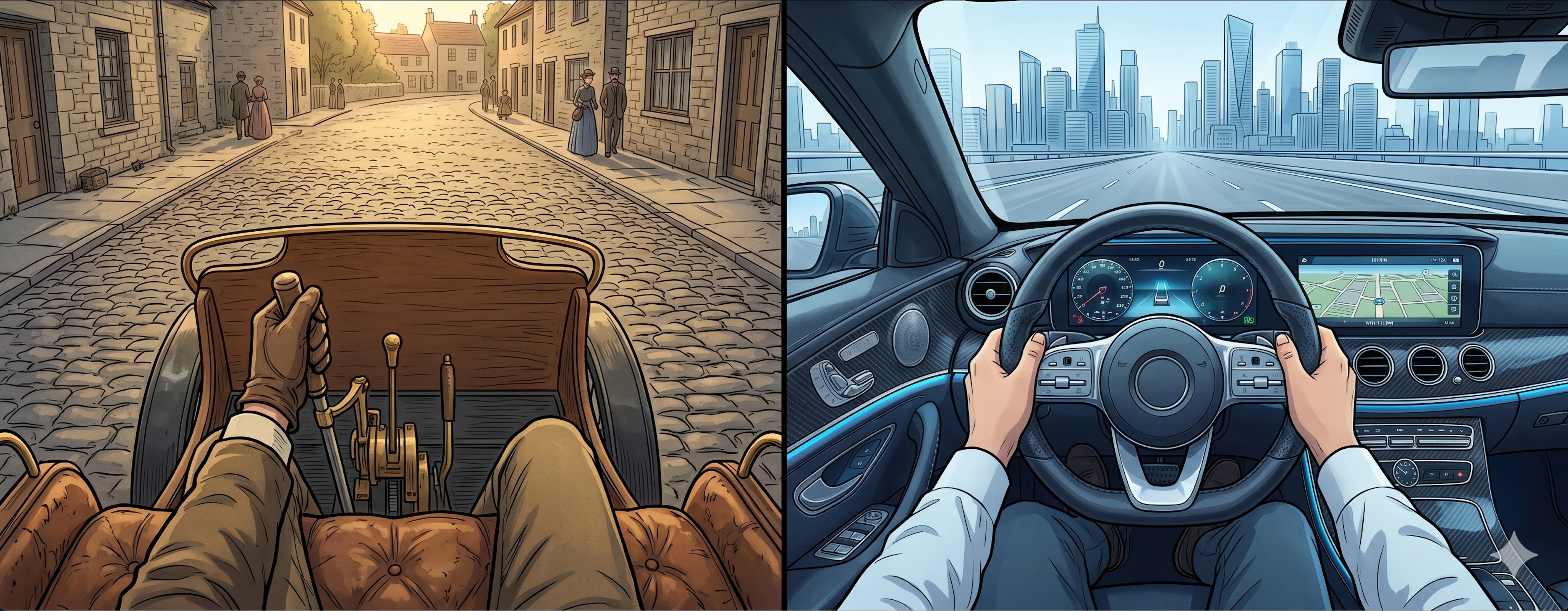
Horseless Carriages
Early cars were called horseless carriages. That name made sense at the beginning. It told people what familiar thing this strange machine resembled. But it was also, in hindsight, a laughable failure of imagination. A horseless carriage was still defined by the thing it was replacing. It pointed backward. It said: here is a carriage, minus the horse.
The more interesting word (thank you, France) was “automobile”: self-moving.
That name pointed toward the new capability. Not a carriage without an animal, but a machine that changed who could move, how far they could go, and how cities would be built. The automobile didn’t just move people: it transformed “passengers” and “riders” into drivers.
“AI doctor” is healthcare’s horseless carriage.
It takes the existing healthcare experience and tries to automate the physician-shaped part of it. It asks how to make the machine behave like the clinician. The backward compatibility excites investors and may even make marginally better telemedicine. But it’s not the transformative frame this technology promises.
What are doctors for?
We need to start by acknowledging something uncomfortable about the line of physician authority: controlling diagnosis, treatment, and access to medicine is not a universal law of nature. It’s a social, legal, and institutional arrangement. A relatively recent one, historically speaking.
And it rests on a bargain we rarely name. “Patient”, from the Latin “patiens”, meaning “to suffer” or “to endure”, perfect term for a system built around waiting rooms and the visit.
It takes a leap of faith to entrust your body to a total stranger. To let someone examine you, touch you, judge your symptoms, name your condition, and decide what you are allowed to do to your own body. We take for granted how radical a social contract this actually is. But it made a lot of sense in its day.
The knowledge doctors (literally “teacher” in Latin) had was scarce and became increasingly expensive. This scarcity moved healthcare out of the home and into universities, eventually into clinics and hospitals. And the education required to understand one’s body became so profoundly out of reach for most people, that as a society we gave up on giving our citizens access to this knowledge and, along with it, perceived authority over their own bodies.
Fast forward to the present day. The average person is more likely to know how to calculate the area of a circle than to be able to point to where their pancreas sits. And yet, most people want authority over their body, deeply. There are many reasons why they’ll still avoid seeing a doctor or taking a medication: cost, access, inconvenience, fear, embarrassment, distrust, fear of mortality. But for more people than we care to admit, seeing a doctor or taking a prescription medicine is a necessary evil. It’s what you do when you no longer have enough agency, information, tools, or legal permission to solve what are arguably some of the most intimate problems yourself.
Now I’m not arguing against the deep meaning of what it is to be a doctor or, more broadly, a clinician, or trying to minimize the unusual bond that can exist between a clinician and a patient. I love being a doctor, and I value the connections I make with each of my patients. I am arguing that the line between “doctor work” and “patient work” is not inherently sacred. It’s a consequence of history, social organization, law and capitalism. This line has long been blurry and in motion - and well before AI. AI will just move it further, and a lot more quickly. But more on this later.
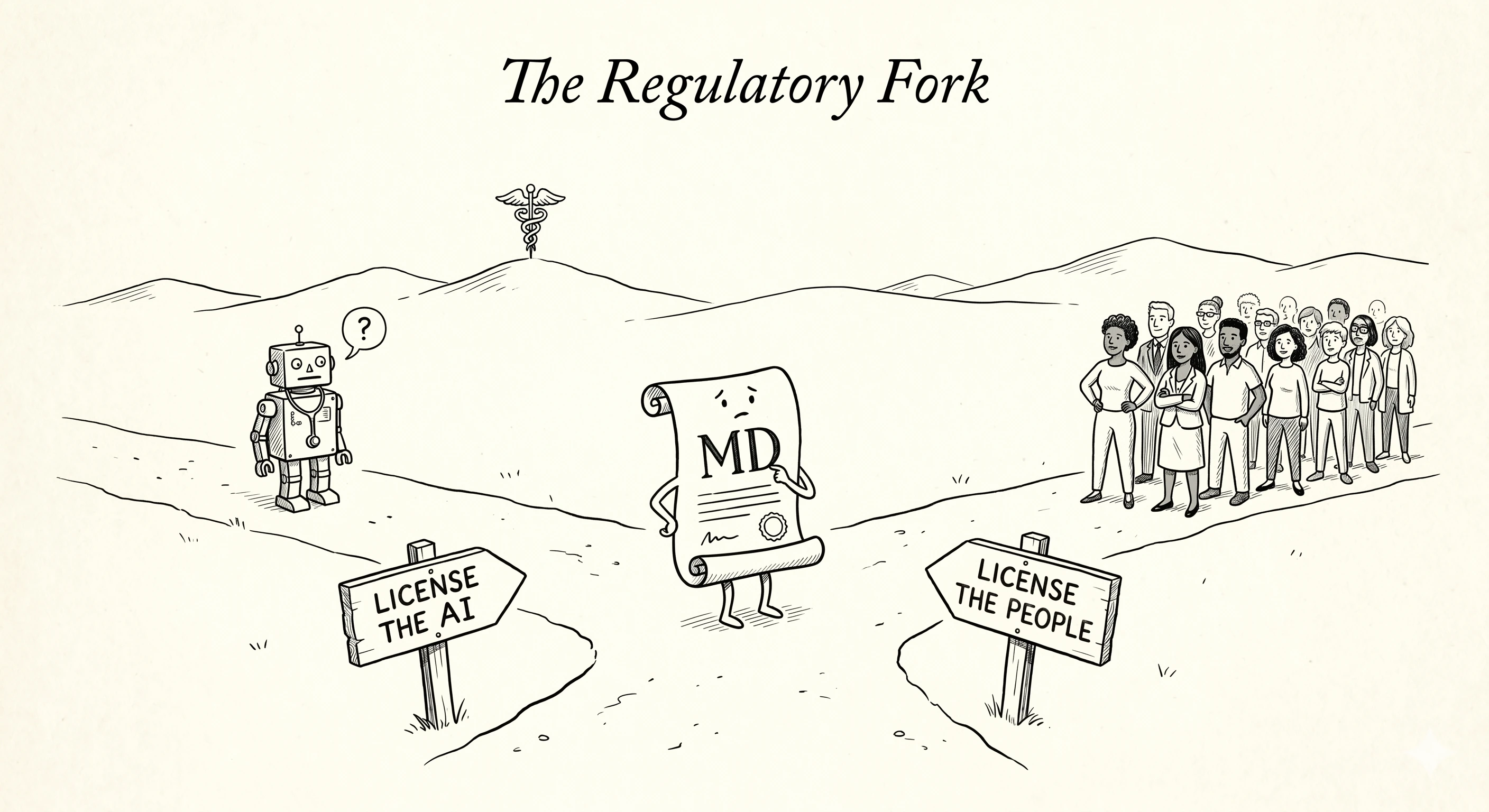
The Regulatory Fork - License the AI, or the Patient?
A recent JAMA article by Alon Bergman, Robert Wachter, and Ezekiel Emanuel argues for a licensure framework for autonomous clinical AI: agents that make care determinations independently, without per-case clinician review. The authors are right about the regulatory moment. Existing frameworks are not built for adaptive, general-purpose systems that may soon do real clinical work - that arguably are already doing real clinical work.
Ok, but how well does our current licensure and certification system perform? The answer is that we don’t really know, because we’ve never studied it rigorously. There’s the old joke about what you call the person who graduates at the bottom of their med school class…Well, it just so happens that this extends further to “clinics”, “hospitals” and “healthcare systems”, not to mention certification exams.
About these…take my own speciality, internal medicine. The American Board of Internal Medicine (ABIM) recently created a new system for ongoing licensure that, in place of in-person exams, allows you to take open-book online multiple choice exams. What’s laudable is that they’re acknowledging that being an internist should not rest on your ability to retain biodegradable facts, but your ability to use available resources to problem solve. What’s laughable - and uncomfortable for some of us - is that a non-clinician using ChatGPT could ace these questions.
The measurement of AI clinical performance is forcing a reckoning of our own deep underinvestment in quality measurement - whether at the individual or institutional level.
Licensing “AI Doctors” ignores the fact that this system of measurement has reliably failed to measure many of the things that matter to patients: reliability, efficiency, access, to name a few. It also failed to give patients any meaningful transparency about quality, beyond whether a doctor had a license or any complaints against it.
What if we licensed patients and caregivers, instead?
I’d like to propose an alternate frame: Patient-operated Healthcare.
This is not patients pretending to be doctors or chatbots recklessly practicing medicine with humans there to hopefully catch their needle-in-a-haystack errors. Not moms performing their child’s appendectomy in the living room with AI and a Youtube video.
Patient-operated healthcare means designing the healthcare system around a new set of actors - patients and caregivers - so that more of the work of healthcare can safely happen where life already happens: at home, where symptoms are changing and nobody from the system is watching.
Patient-centeredness, which the Institute of Medicine identified as one of the fundamental pillars of high-quality healthcare, was an important foundational step - and moral correction. It asked the system to listen to patients, respect their preferences, and design care around their lives. But in practice, it was a disaster; it burdened patients with the enormous responsibility of navigating byzantine and opaque systems - without tools, and without training.
Patient-operated healthcare creates the conditions for a new system. It does not merely ask the old system to become more responsive to patients. It asks what parts of the system need to be remade in service of enabling patients and caregivers to operate it safely, independently, with confidence. This is not a zero-sum formulation that removes clinicians from the experience; it’s one that allows us to imagine a world where “patients” are “sovereigns.”
So let’s ask ourselves - what would healthcare look like if we designed it for the people who are already doing most of the work, and who have the most to lose, the most to gain?
And what if I told you that patient-operated care has mostly been there all along?
Patients collect the samples and buy their labs
For most of the history of modern medicine, if a patient came in with new vaginal discharge, that often meant a pelvic exam. An invasive, intimate, clinician-mediated procedure.
Now many clinics, including my own, allow patients to self-collect vaginal swabs for STI testing. The FDA recently authorized an at-home test for chlamydia, gonorrhea, and trichomoniasis that can be purchased without a prescription and performed entirely at home. That is not “AI replacing doctors.” That is the work moving.
Long before DTC telemedicine, the supplements industry massively exploited the suppressed desire people had to self-medicate without a doctor. There are now, of course, a slew of companies offering DTC labs. Just this week I got an email from Function Health, titled “A physical measures a fraction. This measures more.”
I won’t bore you with a recitation of the latest published evidence on generative AI for diagnosis. It’s good enough (accuracy + access) that millions of people are choosing it over their doctors. And it will turbocharge the demand for OTC confirmatory self-diagnosis, whether via labs or imaging.
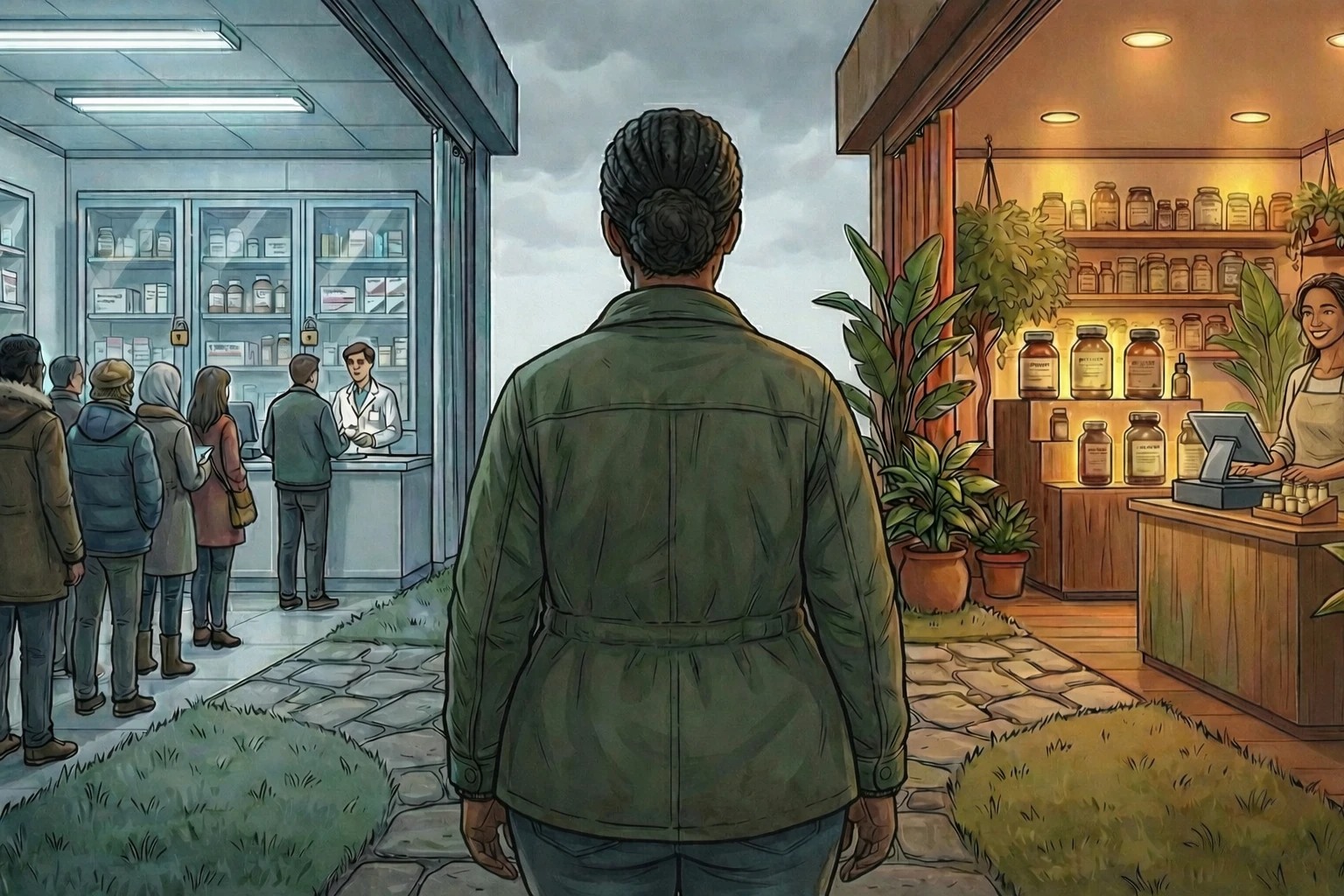
Your local pharmacy = regulated zone of self-diagnosis and self-treatment
The OTC aisle is a longstanding regulated zone of self-diagnosis and self-treatment. We don’t usually describe it that way, because it’s familiar. But that’s what it is. Society and the market decided there are symptoms people can interpret, risks they can weigh, and medications they can use without a physician standing between them and the shelf.
Around the world, countries are adding aisles.
In England, Pharmacy First allows community pharmacists to supply prescription-only medicines, including antibiotics and antivirals when appropriate, for seven common conditions without requiring a GP appointment. Australia now allows trained pharmacists across states and territories to provide antibiotics for eligible uncomplicated UTIs. Ontario expanded pharmacist prescribing for minor ailments, including specific antibiotics for uncomplicated UTIs and Lyme disease prophylaxis after high-risk tick bites.
There are also less formal, less safe versions of this reality. Non-prescription antibiotic dispensing in community pharmacies remains common in many parts of the world, especially in lower-income countries. Until fairly recently, many Americans crossed into Mexico to buy antibiotics without prescriptions.
I’m not advocating for an unsafe rollout of a widely expanded range of OTC meds. But patients clearly want the line moved. They want more agency. More privacy. More immediacy. More ability to act without waiting weeks, paying hundreds of dollars. The supplements industry has long benefited from the paranoia and mistrust created by the prescription boundary - and sold people mostly the promise of agency over their own health.
I’ve heard that some of the highest paid concierge docs offer their globetrotting patients a service where they hand patients a briefcase of prescription medications to use as needed. Think about that…
Expanded OTC aisles are closer than you think
The FDA’s ACNU rule (Additional Condition for Nonprescription Use), finalized in late 2024, marks the end of the “Label Era,” where patient safety was tethered to the limits of a static piece of cardboard. Historically, if a drug was too complex to be explained in a three-inch box of text, it stayed behind the prescription gate. The ACNU rule admits that this bottleneck was a failure of infrastructure, not patient intelligence. It allows for the nonprescription switch of complex medications provided they are coupled with an “Additional Condition” - a regulated, digital guardrail like a diagnostic questionnaire or a mandatory data integration that acts as a high-fidelity surrogate for a physician’s screening.
The ACNU pathway may very well be the faster regulatory lane because it aligns with the unavoidable laws of market gravity. Unlike the “AI doctor,” which faces the Herculean task of proving general-purpose clinical judgment while navigating a quagmire of state-by-state legislation, the federal architecture for ACNU is already in place. We don’t need to move the mountain of medical licensure; we just need the technology to fill the frame.
Could this be the holy grail for Prevention?
Patients decide what to eat, when to exercise, when to seek care, whether to take the medication, whether to wait one more day. Patients decide which symptoms to disclose, which specialist to pursue, whether to accept the plan, whether to push back, whether to get the test, whether to change their diet, keep checking their blood pressure, whether to ask the embarrassing question, whether to bring their mother to the emergency room because something about her is not baseline.
Patients have always been at the center, disempowered, under-equipped, and highly dependent upon an expensive system designed to gate access to scarcity.
For years I and many others inside and outside our healthcare system have railed against it - calling it a “sick care” system. We’ve agonized over our collective inability to deliver on what is supposed to be our profession’s highest aim: prevention.
Patient-operated care promises to free us of the baggage of our many failed experiments to solve a problem that was always, fundamentally, out of our reach, experiments that viewed patients as compliance targets, rather than operators, and which created massive administrative and cost bloat.
Take Value-Based-Care and Accountable Care Organizations. We realized that paying for every individual test and pill was breaking the economy, so we tried to pay for “outcomes.”
But look at how we did it. We didn’t change who did the work; we just changed the financial plumbing. We assumed that if we put the hospital on a budget, the hospital would figure out how to “manage” the patient better. It spawned a massive bureaucracy of risk-adjustment, upcoding, and corporate consolidation, yielding savings that are, at best, a rounding error.
This is the ultimate horseless carriage. We tried to engineer a better carriage driver by changing how we tip them, rather than investing in designing for an operator who can steer their own care. We spent billions on incentivizing hospitals and clinics to prevent disease, ignoring the fact that most people want to live in their homes, kitchens, living rooms, where real health happens, and where these institutions have no reach.
Hospital/Clinic/Lab at Home
The precedent for this shift is already forming. The FDA’s “Home as a Health Care Hub” initiative explicitly reimagines the residence as a clinical site. The implication is clear: patient-operated healthcare cannot mean patients typing symptoms into a chatbot and hoping for the best. It requires infrastructure every bit as capable as what we’ve built for clinicians. If the EHR is a hospital management system, we need the equivalent for the home - an OS that doesn’t assume clinical training but does assume a demand for continuous, high-stakes support. These knowledge tools may end up looking closer to what ICUs use than what a primary care provider uses.
Making the Invisible Visible: The Labor of Care
This infrastructure leads to a radical possibility: AI may finally make patient and caregiver labor visible enough to pay for.
Today, families perform an enormous amount of “ghost work”, medication reconciliation, symptom monitoring, and post-discharge surveillance. For medically complex patients, caregivers manage g-tubes, use home ultrasound devices, trouble-shoot trachs. Because this labor is informal and unstructured, it is invisible to payers. But once professional-grade tools allow AI to structure, timestamp, and audit this work, it moves from “family duty” to “clinical output.”
We already have the primitives for this. Medicaid’s self-directed services and CMS’s GUIDE dementia model have begun to reimburse caregiver support and training. But the future isn’t just paying for “education”; it’s paying for structured labor that prevents avoidable deterioration. In a patient-operated model, insurers won’t just pay for an “AI Doctor”; they will pay for the structured patient work that keeps the patient out of the ER. This is the ultimate redistribution of AI abundance in healthcare: moving capital from the institution to the operator at the edge.
Building the Patient’s Operating System
Clinicians operate within a massive, integrated infrastructure: teams, AI scribes, decision support, and medication databases. They have the EHR - which, for all its flaws, is the “operating system” of modern medicine.
Patients, meanwhile, are left with a fragmented mess: clunky portals, a few clinical-grade tools like BP cuffs, consumer wearables that prioritize “wellness” metrics over clinical utility, and, more recently general-purpose AI. Surrounding them is a predatory market of supplements and unnecessary diagnostics designed to exploit their desire for agency without giving them the tools to exercise it. This isn’t an operating system; it’s chaos. And the gap between the professional cockpit we give clinicians and the patient’s “junk drawer” of health data is absurd.
If patients and caregivers are going to operate their own care, they need an infrastructure designed for sovereignty, not just “engagement.” AI for wellness won’t cut it. Wearables masquerading as clinical-grade devices only obscure the real work to be done. We don’t need more HRV trackers; we need professional-grade tools that allow a mother to manage her child’s asthma or a son to titrate his father’s heart failure meds with the same precision as, eventually, a hospitalist.
We’re starting to see the rudiments of these kinds of systems now - we’re building one at My Doctor Friend, the company I founded (the irony of our name is not lost on me). But of course this is just the start - building a unified knowledge base about a person, a patient-operated record, is just the foundation. We do not yet know exactly what patient-operated healthcare should look like. But one thing is certain; it can’t be designed only by physicians, hospitals, payers, regulators, or AI companies. It has to be built with and by the patients and caregivers who are already doing the work, already carrying the risk, and already living with the consequences.
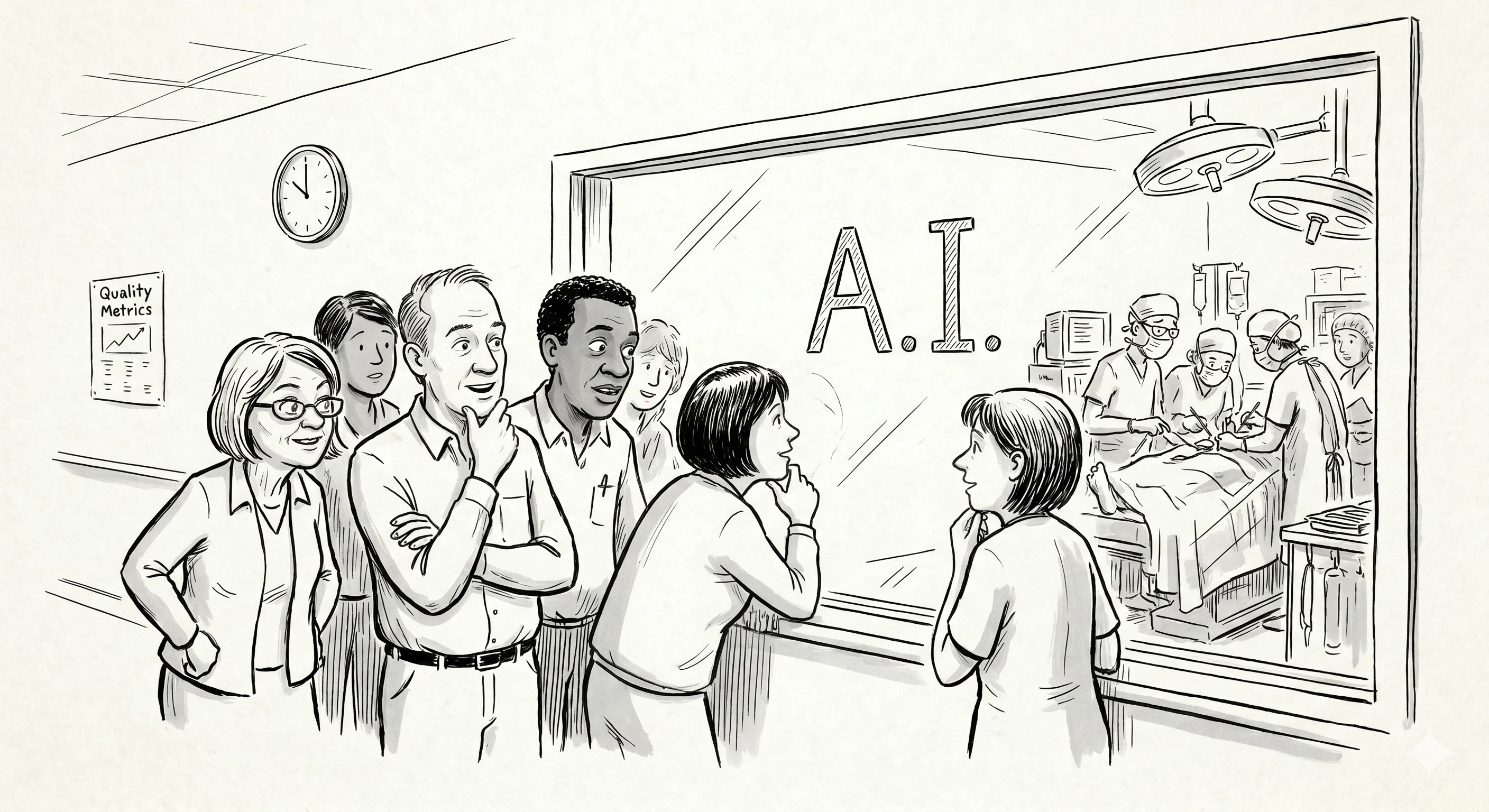
The Quality Audit
Patient-operated care will redefine Quality. For a century, healthcare quality has been a “black box,” inferred from institutional reputation or a doctor’s bedside manner. Patients couldn’t see the process, so they just as often judged the “theatre” of care.
Patient-operated healthcare changes that. When patients have persistent memory, full access to records, and AI capable of detecting contradictions or missed follow-ups in real-time, the “quality problem” becomes visible from the outside.
This transparency should scare the legacy system. It should also excite us. It means we are moving toward a world where quality isn’t a credential on a wall, but a measurable standard that a patient can audit themselves.
Will AI replace doctors? Well…doctor replacement began long ago
We can respond to the fastest growing health technology in history by saying: “Don’t do that.” Or we can recall the lessons taught by old Dr. Google’s abdication of responsibility, and realize that the job is not to shame this impulse or bury our heads in the sand. The job is to design for it.
To some extent, we’ve been designing healthcare delivery solutions for this scarcity for decades. Medicine has already redistributed physician work many times: to nurses, pharmacists, advanced practice providers (APPs, e.g. NPs and PAs), protocols, home monitoring, retail clinics. AI is not the beginning of redistribution. It is an accelerant.
So yes, physician labor is already being replaced. But not all at once. Task by task. Setting by setting. Specialty by specialty. Usually when cost pressure or access pressure becomes impossible to ignore. We should fully expect serious studies testing how AI changes the safe delegation boundary among physicians, APPs, RNs, etc.
This is yet another reason why “AI doctor” is the wrong center of gravity. That frame creates false categories like “AI nurse” or “AI nutritionist.” These distinctions break down when generative AI can answer questions at the level of a physician subspecialist. In the domain of pure knowledge, the hierarchy is flattening.
This shift forces us to ask a different question. If knowledge is no longer a meaningful discriminator, what is the clinician actually for? The answer may lie in the procedural domain and the pursuit of excellence in physical intervention. We are moving toward a world where “doctor work” is defined by the things a machine, or a machine + enabled patient/caregiver cannot do at the edge (until the robots arrive). It is the high-stakes procedure, the physical exam, the cases that require embodied judgment, relationship, and action under uncertainty.
Pragmatically, it will take years for a patient-operated healthcare system to be built out, and no doubt it will follow something like the traditional tech adoption curve. So backward compatibility is a given; and with all the pent-up demand in healthcare, there will be plenty of traditional clinical work to go around.
Healthcare as a Transit System - and the future of Clinicians
Larry Weed saw this earlier than almost anyone. His view was not that computers would make doctors irrelevant. It was that computers would change what doctors were for, and that patients would need to become much more central in their own care.
In Medicine in Denial, Weed and Lincoln Weed compared the healthcare system we need to the transportation system: ordinary people choose destinations, routes, and modes of travel, while expert service providers are available when needed. Healthcare should not be an esoteric domain controlled only by specialized experts. It should become a system ordinary people can use when feasible.
That metaphor has really shaped how I think about this.
We’re at the stage with large language models and AI where I imagine horseless carriages - let’s use cars - were when they first coexisted with horse-drawn carriages. One has to imagine that when cars first appeared, some people got in them, crashed them, injured or killed themselves, and a bunch of horse-drawn carriage drivers said: “Yep. That is what happens when ordinary people try to use powerful technology themselves.” But the answer wasn’t “don’t give people cars.” It also wasn’t “all cars need professional drivers.”
The answer was to make safer cars. Build safer roads. Create licensure. Create signs, lanes, traffic rules, insurance, maintenance standards, crash testing, seat belts, airbags. Our collective belief in that system reshaped how cities were architected. The same kind of re-architecture will happen in healthcare. This does not obviate the need for physicians. But it will change what physicians - and all clinicians - do.
In our society, we allow people to walk. We allow people to bike. We allow many people to drive. But when it comes to modes of transportation that are riskier, like driving a bus, operating a train, or flying an airplane, we still need experts. Not because ordinary people are incapable of judgment, but because these are complex operations that require specialized training and where error is catastrophic.
Much of medicine is not flying a plane. Much of medicine is more like riding a bike or driving a car. With the right tools and the right system design, much more of that can likely be carried out safely by patients, caregivers, and families. But we will still need clinicians for many years to come, because there’s a lot of healthcare that requires embodied judgment and the ability to act quickly when uncertainty is dangerous.
But we should be clear-eyed about this. Clinicians will not be able to defend every inch of the old territory. It will not work. This doesn’t mean the future is anti-clinician. It’s anti-stagnation.
The profession that learned how to train clinicians now has to help train patients and caregivers to operate safely with AI. This means that clinicians will need to understand this technology deeply, and directly shape its application. If we’re building a new transportation system, we need people who understand how the machinery fails, how novices make mistakes, where guardrails are needed, and when ordinary driving becomes flying a plane.
And we also have to admit something uncomfortable. What we had before was always, at best, a massive compromise. Not just for patients. For clinicians, too. A system of rushed visits, delayed diagnoses, fragmented records, inaccessible specialists, prior authorization, stale charts, lost follow-up, and heroic individual effort masquerading as quality. And tremendous moral injury.
Patient-operated healthcare is not about replacing clinicians with chatbots. It’s about admitting that the old model was never the endpoint. It was a historical compromise: a system built around scarcity, expertise, institutions, and the limits of what patients and caregivers could safely do themselves.
Now, finally, we can start designing beyond that compromise.
References & Further Reading:
[1] Productivity paradox / Bob Wachter framing
Robert Wachter and Erik Brynjolfsson, “Will Generative Artificial Intelligence Deliver on Its Promise in Health Care?” JAMA, 2024.
https://jamanetwork.com/journals/jama/fullarticle/2812615
https://pubmed.ncbi.nlm.nih.gov/38032660/
[2] Larry Weed, problem-oriented medical record, SOAP note
Larry Weed, “Medical Records That Guide and Teach,” New England Journal of Medicine, 1968.
https://pubmed.ncbi.nlm.nih.gov/5637758/
https://www.nejm.org/doi/abs/10.1056/NEJM196803142781105
https://www.nejm.org/doi/10.1056/NEJM196803212781204
[3] Larry Weed / Medicine in Denial / transportation metaphor
Larry Weed and Lincoln Weed, Medicine in Denial.
https://infohistory.rutgers.edu/pdf/weed/medicine-in-denial.pdf
Useful secondary discussion:
[4] “AI doctor” / autonomous clinical AI licensure
Alon Bergman, Robert Wachter, and Ezekiel Emanuel, “A Licensure Framework for Autonomous Clinical AI,” JAMA, 2026.
https://jamanetwork.com/journals/jama/article-abstract/2848378
[5] Medical licensure as historical/legal arrangement
Paul Starr, The Social Transformation of American Medicine: The Rise of a Sovereign Profession and the Making of a Vast Industry. New York: Basic Books, 1982.
[6] “Patient” and “doctor” etymology
Patient:
https://www.etymonline.com/word/patient
Doctor:
https://www.etymonline.com/word/doctor
[7] Horseless carriage / automobile terminology
Automobile etymology:
https://www.etymonline.com/word/automobile
[8] ABIM longitudinal/open-book assessment
[9] IOM / patient-centeredness as quality aim
IHI summary of Crossing the Quality Chasm:
https://www.ihi.org/library/publications/crossing-quality-chasm-new-health-system-21st-century
NCBI Bookshelf version:
https://www.ncbi.nlm.nih.gov/books/NBK222274/
AHRQ six domains summary:
https://www.ahrq.gov/talkingquality/measures/six-domains.html
[10] Pharmacy First, England
https://www.england.nhs.uk/primary-care/pharmacy/pharmacy-services/pharmacy-first/
https://healthmedia.blog.gov.uk/2024/02/01/pharmacy-first-what-you-need-to-know/
[11] Pharmacist prescribing, Ontario
https://ocpinfo.com/pharmacy-professionals/expanded-scope-of-practice/minor-ailments/
https://ocpinfo.com/wp-content/uploads/2025/05/minor-ailments-drug-classes-and-specified-drugs.pdf
[12] Pharmacist UTI prescribing, Australia
Australasian College of Pharmacy, uncomplicated cystitis guidance:
https://www.acp.edu.au/education/guidelines/uncomplicated-cystitis/
Pharmaceutical Society of Australia, NT UTI resources:
https://www.psa.org.au/resource/uti-resources-nt/
NT Health pharmacist UTI protocol PDF:
https://health.nt.gov.au/media/pdf/medicines-and-poisons-notices/pharmacist-uti-sstp.pdf
[13] UK simvastatin pharmacy availability
PubMed, “Reclassification of simvastatin to over-the-counter status in the United Kingdom.”
https://pubmed.ncbi.nlm.nih.gov/15519290/
PubMed, “Simvastatin over the counter.”
https://pubmed.ncbi.nlm.nih.gov/15849973/
BMJ, “Move to sell statins over the counter raises concerns.”
https://www.bmj.com/content/328/7450/1221.3
[14] Non-prescription antibiotic dispensing worldwide
Lancet Infectious Diseases systematic review:
https://www.thelancet.com/journals/laninf/article/PIIS1473-3099(23)00130-5/fulltext
PubMed version:
https://pubmed.ncbi.nlm.nih.gov/37105212/
ScienceDirect page:
https://www.sciencedirect.com/science/article/abs/pii/S1473309923001305
[15] FDA ACNU rule
FDA ACNU overview:
Federal Register final rule:
[16] Self-collected vaginal swabs
CDC laboratory recommendations:
https://www.cdc.gov/mmwr/preview/mmwrhtml/rr6302a1.htm
CDC PDF:
https://www.cdc.gov/mmwr/pdf/rr/rr6302.pdf
CDC STI treatment guidelines, chlamydia:
https://www.cdc.gov/std/treatment-guidelines/chlamydia.htm
[17] FDA-authorized at-home STI test
FDA press release:
[18] Generative AI diagnostic performance
Nature Digital Medicine systematic review/meta-analysis:
https://www.nature.com/articles/s41746-025-01543-z
PubMed version:
https://pubmed.ncbi.nlm.nih.gov/40121370/
JAMA Network Open randomized clinical trial:
https://jamanetwork.com/journals/jamanetworkopen/fullarticle/2825395
PubMed version:
https://pubmed.ncbi.nlm.nih.gov/39466245/
[19] Public use of AI for health information
West Health / Gallup:
Gallup:
https://news.gallup.com/poll/707789/americans-turning-supplement-healthcare-visits.aspx
[20] EHR burden and clinician burnout
Burnout related to EHR use in primary care:
https://pmc.ncbi.nlm.nih.gov/articles/PMC10134123/
PubMed version:
https://pubmed.ncbi.nlm.nih.gov/37073905/
EHR inbox burden / notifications:
https://pmc.ncbi.nlm.nih.gov/articles/PMC6712240/
[21] FDA Home as a Health Care Hub
FDA Home as a Health Care Hub:
https://www.fda.gov/medical-devices/home-health-and-consumer-devices/home-health-care-hub
FDA FAQ:
FDA launch announcement:
[22] Medicaid self-directed care / paid caregiving
Medicaid.gov self-directed services:
https://www.medicaid.gov/medicaid/long-term-services-supports/self-directed-services
Medicaid.gov self-directed personal assistance services:
USAGov paid family caregiver overview:
https://www.usa.gov/disability-caregiver
[23] CMS GUIDE dementia model
CMS GUIDE model:
https://www.cms.gov/priorities/innovation/innovation-models/guide
[24] Value-based care / ACO savings and coding concerns
JAMA Health Forum, “Accountable Care Organization Savings, Hard to Measure, Hard to Find.”
https://jamanetwork.com/journals/jama-health-forum/fullarticle/2845358
PMC version of Khullar et al., budgetary impact of MSSP:
https://pmc.ncbi.nlm.nih.gov/articles/PMC12924104/
JAMA Health Forum, ACO leader perspectives:
https://jamanetwork.com/journals/jama-health-forum/fullarticle/2816469
PubMed version:
https://pubmed.ncbi.nlm.nih.gov/38488778/
Health Affairs, risk adjustment / coding incentives:
https://www.healthaffairs.org/doi/10.1377/hlthaff.2023.01351
PubMed version:
https://pubmed.ncbi.nlm.nih.gov/39761451/
[25] Knowledge Coupling / Problem-Knowledge Coupler
Lawrence L. Weed, L.M. Abbey, K.A. Bartholomew, et al., Knowledge Coupling: New Premises and New Tools for Medical Care and Education. New York: Springer-Verlag, 1991.
https://link.springer.com/book/10.1007/978-1-4612-3150-9
[26] e-Patients / participatory medicine
Tom Ferguson and the e-Patient Scholars Working Group, e-Patients: How They Can Help Us Heal Healthcare. White paper, 2007.
https://participatorymedicine.org/e-Patient_White_Paper_with_Afterword.pdf
HTML version:
https://participatorymedicine.org/e-patients-white-paper/contents/
[27] Peer-to-peer healthcare / patient networks
Susannah Fox, Peer-to-Peer Health Care. Pew Internet & American Life Project, 2011.
https://www.pewresearch.org/internet/2011/02/28/peer-to-peer-health-care/
Susannah Fox and Maeve Duggan, Peer-to-Peer Health Care. Pew Research Center, 2013.
https://www.pewresearch.org/internet/2013/01/15/peer-to-peer-health-care/
[28] OpenNotes / patient access to clinician notes
Tom Delbanco et al., “Inviting Patients to Read Their Doctors’ Notes: A Quasi-experimental Study and a Look Ahead,” Annals of Internal Medicine, 2012.
https://pubmed.ncbi.nlm.nih.gov/23027317/
Jan Walker, Michael Meltsner, and Tom Delbanco, “US Experience with Doctors and Patients Sharing Clinical Notes,” BMJ, 2015;350:g7785.
https://www.bmj.com/content/350/bmj.g7785
[29] 21st Century Cures Act / information blocking / patient access to electronic health information
Office of the National Coordinator for Health Information Technology, “ONC’s Cures Act Final Rule.”
https://healthit.gov/regulations/cures-act-final-rule/
Office of the National Coordinator for Health Information Technology, “Information Blocking.”
Originally published on Sovereign Care on Substack.