Patient-Operated Care

A future where patients and caregivers can drive much more of their own care, with the tools, rules, diagnostics, medications, records, and expert backup that make ordinary operation possible.

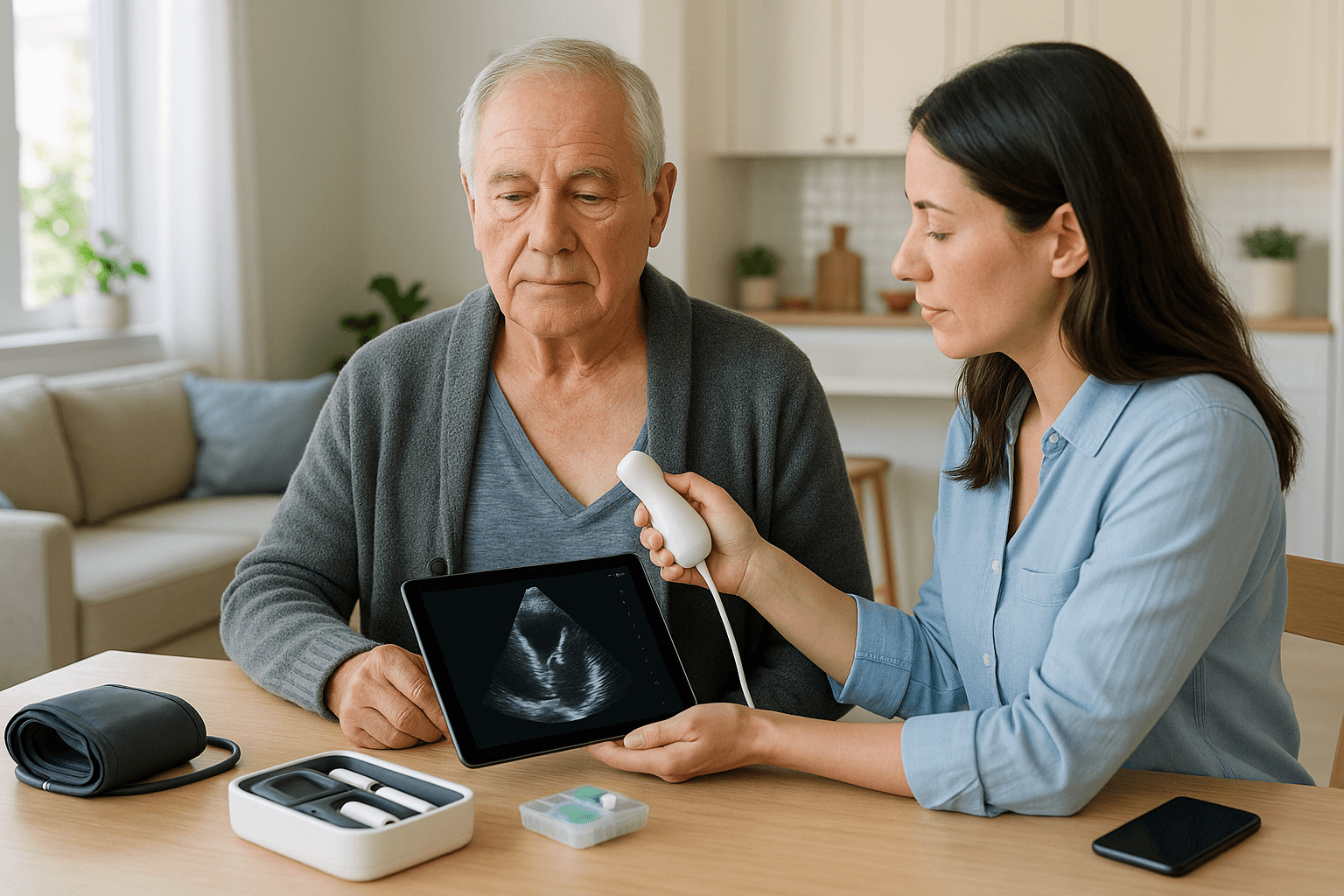
An older adult and caregiver using a portable cardiac ultrasound at home

The demand is already here

Healthcare still acts like patients are passengers.

In reality, people are already making operational decisions long before and long after a clinician enters the room.

People already decide whether a symptom is changing.

They already track readings, side effects, medication changes, and follow-up tasks.

They already interpret portal results before anyone has explained them.

They already prepare for visits, message clinicians, and coordinate family input.

They already decide when to wait, when to call, when to test, and when to escalate.

Working definition

Patient-operated care is a healthcare system designed around patients and caregivers as operators.

Like transportation, it assumes ordinary people can safely use powerful tools when the system provides clear routes, reliable signals, training, standards, maintenance, insurance, and expert help for higher-risk situations. It is not a moral demand that patients do more. It is a system design argument: give people a vehicle, a dashboard, a map, road rules, and a way to call for expert help when the terrain changes.

It is not

  • a chatbot pretending to be a doctor
  • a slogan for self-care or patient engagement
  • a way to transfer more burden onto patients
  • a single disease pathway, device, or medication protocol

It is

  • a healthcare system ordinary people can operate when the risk is appropriate
  • home clinical infrastructure with records, diagnostics, medications, and guidance connected
  • clear rules for when patients can proceed and when expert help is needed
  • a way to reserve clinician time for uncertainty, procedures, examination, and high-risk care

Why now

AI changes the answer because the bottleneck was never only intelligence. It was system design.

The prior system was built on knowledge scarcity, episodic visits, and clinician-mediated access. Generative AI, home diagnostics, connected devices, and direct-access testing make it possible to build healthcare that patients can actually navigate.

Medical knowledge is no longer scarce

Generative AI can make records, symptoms, tradeoffs, and instructions understandable to people without years of clinical training.

The home is becoming a clinical site

Blood pressure cuffs, glucose monitors, home swabs, direct-access labs, and portable imaging are moving clinical inputs into daily life.

Systems can guide, measure, and escalate

Software can create instructions, check understanding, watch patterns, coordinate next steps, and route people to clinicians when the situation becomes higher risk.

Prototype example

Roberto's blood pressure shows therapeutic inertia in plain sight.

Hypertension is measurable at home and responsive to medication, yet routine adjustments often move at appointment speed. Roberto's story shows what gets lost when every small branch of care has to pass through the old system.

Time from diagnosis to medication switch

57 days21 days

Time from likely side effect to action

36 daysSame day

Safety labs connected to the change

Dependent on visit workflowOrdered automatically

Traditional care

  1. January 8

    The diagnosis starts in clinic

    154/94

    Roberto leaves a primary care visit with a new diagnosis of high blood pressure and a prescription for lisinopril 10 mg. He is told to buy a cuff, check at home, and come back in six weeks.

  2. January 15

    The pattern is still above goal

    149/91 average

    He has seven days of home readings. Some are 142/88. Some are 158/96. He is not sure which readings count, so the pattern sits in his notes app.

  3. January 29

    A likely side effect appears

    147/89 average

    Roberto develops a dry cough that wakes him at night. Lisinopril is an ACE inhibitor, and dry cough is a known side effect. He sends a portal message asking whether to stop or switch.

  4. February 2

    The system asks for more data

    152/92 morning

    A reply asks him to send two more weeks of readings and offers the next available appointment on March 6. His blood pressure is still not controlled, and the cough continues.

  5. March 6

    The medication finally changes

    57 days later

    At the follow-up visit, Roberto stops lisinopril and starts losartan. The decision was routine, but the path required weeks of waiting, messages, symptoms, and uncontrolled readings.

Patient-operated future

  1. January 8

    Roberto starts with a home protocol

    154/94

    Roberto enters his clinic reading, home cuff model, medications, kidney history, and symptoms. The system checks technique, confirms no red flags, and starts a structured blood pressure plan.

  2. January 15

    The system reads the pattern

    149/91 average

    Seven days of validated readings show his blood pressure is improving but still above goal. Roberto sees what the numbers mean and what would trigger escalation.

  3. January 29

    The cough is handled the same day

    Likely ACE cough

    When Roberto reports a dry nighttime cough, the system explains that lisinopril can cause this, checks for danger signs, and presents options: continue, switch to losartan, or get clinician help.

  4. January 29

    Roberto chooses a new route

    Losartan selected

    He chooses losartan after reviewing tradeoffs, reasons to avoid it, and what labs are needed. The medication becomes available under the patient-operated model.

  5. February 5

    Safety monitoring happens automatically

    K 4.3, Cr 0.9

    Roberto completes direct-access kidney function and electrolyte testing. The results are in range, the plan continues, and the system keeps watching home readings and side effects.

  6. February 20

    The outcome is visible

    128/79 average

    The cough is gone, the home average is near goal, and the escalation rules remain clear. A clinician is still available if readings worsen, labs change, or symptoms suggest higher risk.

This is a future-state example, not medical advice or a description of what patients can do today. Blood pressure treatment can involve serious risks, and urgent symptoms still require professional care.

Examples

The category is a patient-side operating layer, not a checklist of use cases.

Much of healthcare already happens at home, in pharmacies, in portals, in family chats, and in the time between visits. Patient-operated care names the layer that gives that work memory, tools, authority, measurement, and backup.

Organizing frame

The question is not which condition comes first.

The better question is which pieces of care can move into safe patient operation when memory, diagnostics, rules, and expert backup are present.

AI doctor

patient-operated care

patient engagement

patient authority with tools

scattered self-care

auditable care work

Health memory

The chart becomes a tool the patient can use.

Symptoms, records, goals, questions, family observations, clinician instructions, and prior decisions live in one working memory instead of scattered portals, notes, and screenshots.

visit agendasrecord reconciliationcaregiver handoffs

Clinical inputs

The home becomes a legitimate care site.

Blood pressure, weight, symptoms, side effects, self-collected swabs, direct-access labs, and home devices become useful because the system explains what to collect and what changes matter.

home monitoringat-home testsdirect-access diagnostics

Guided action

Routine decisions move into defined pathways.

OTC products, pharmacy protocols, action plans, and ACNU-like self-selection can let patients proceed when the risk is bounded and the rules are explicit.

medication side effectsasthma action planspharmacy access

Coordination

Caregiver labor stops being invisible.

Families already reconcile medications, track symptoms, schedule follow-up, interpret instructions, and decide when something is not baseline. Patient-operated care gives that work structure and a record.

shared health memoryfollow-up tasksfamily observations

Escalation

Safety is built around stopping rules.

The goal is not endless self-management. Worsening patterns, red flags, dangerous uncertainty, and social constraints should trigger clinician, pharmacist, urgent care, or emergency backup.

red flagsclinician reviewurgent escalation

Quality audit

Patients can see whether care is working.

Persistent memory and AI support make missed follow-up, contradictions, delayed treatment changes, unclear instructions, and unsupported work visible from outside the institution.

missed resultscare gapsperformance measurement

Principles

Not more burden. More operating capacity.

The test of patient-operated care is not whether people can absorb more responsibility. The test is whether the system finally gives them the tools, information, authority, and backup to carry less of that responsibility alone.

Agency without abandonment

Patient-operated care should reduce burden, not rename burden as empowerment. The system must provide memory, structure, backup, and escalation.

Care where life happens

Most health decisions happen in kitchens, bedrooms, bathrooms, workplaces, cars, and family group texts. The tools should meet patients there.

Clinicians for higher-risk terrain

This future does not make clinicians irrelevant. It lets them focus on dangerous uncertainty, physical examination, procedures, relationship, and judgment.

Quality patients can audit

When patients have memory, records, and AI support, missed follow-up, contradictions, and vague plans become visible from the outside.

Where My Doctor Friend fits

Patient-operated care is bigger than any one company. We are building infrastructure for it.

Today, My Doctor Friend helps people organize health information, prepare for visits, track what is changing, understand plans, and communicate more clearly. That is the first layer of a larger future: a patient operating system for care.

My Doctor Friend tracking screen

Built for patients and caregivers

The goal is not to replace the clinical system. It is to give people a working layer for the moments when the clinical system is absent, delayed, fragmented, or hard to use.

Help define the category.

We are collecting examples from patients, caregivers, clinicians, advocates, and policymakers who already see this shift happening.

Share what you are seeing

Join the conversation

What people are seeing

Patients, caregivers, clinicians, advocates, and policymakers are already watching this shift. Share an example, react to what others have posted, or reply to keep a thread going.

Share what you are seeing

Email stays private and is never shown publicly. Please leave out personal medical details.

Loading the discussion...